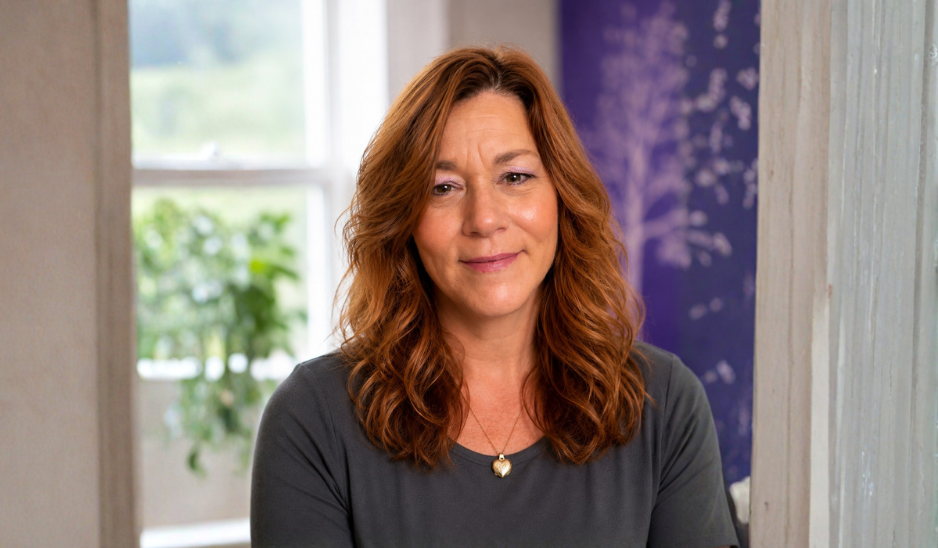



Q1: For those who may not know you yet, can you share a little about your journey and what first drew you to yoga?
I first came to yoga during a season of life where I was carrying a lot of stress and feeling disconnected from myself — physically, mentally, and emotionally. What initially drew me in was not the idea of becoming a teacher or therapist; it was simply the feeling of finally being able to breathe again.
Over time, yoga became less about poses and more about awareness, steadiness, and learning how to listen to my body instead of constantly pushing against it. That experience eventually inspired me to begin teaching.
I completed my 200-hour training through Asheville Yoga Center in 2018 and later returned for the 300-hour program, which deeply shaped the way I approach teaching and holding space today. Since then, my work has continued evolving through yoga therapy training, private sessions, community classes, and working with people from many different walks of life throughout South Carolina.
What continues to draw me to yoga is its ability to meet people exactly where they are. I’ve seen firsthand how simple practices — breath, movement, rest, awareness, and nervous system support — can create meaningful shifts in everyday life.

Q2: What inspired you to continue your studies through Asheville Yoga Center’s 300-Hour program? At that stage in your journey, what were you seeking to deepen or explore?
After teaching for a while, I realized I wanted to move beyond simply teaching poses and sequencing classes. I was becoming increasingly interested in the deeper layers of yoga — especially how yoga supports the nervous system, emotional well-being, aging, stress management, and the realities of everyday life.
The 300-hour program at Asheville Yoga Center gave me space to deepen not only my technical understanding of yoga, but also my confidence as a teacher and space holder. It challenged me to trust my own voice instead of trying to teach the way I thought a yoga teacher was “supposed” to sound.
One of the most meaningful parts of that experience was learning that authenticity matters more than performance. I began to understand that people don’t necessarily need perfection from a teacher — they need presence, safety, compassion, and someone who can meet them honestly where they are.

Q3: One of the intentions behind AYC’s 300-hour program is to support teachers in stepping more fully into their authentic voice. What does showing up authentically mean to you as a space holder and yoga therapist?
To me, showing up authentically means creating spaces where people feel safe to be human.
As both a yoga teacher and yoga therapist, I try to approach my work in a way that is grounded, accessible, and free from pressure or performance. I work with many students who are beginners, aging, stressed, recovering from injuries, overwhelmed by life, or intimidated by traditional yoga spaces. Authenticity means meeting those students with compassion instead of expectation.
It also means teaching in a way that reflects who I truly am. I’ve learned that I don’t have to sound overly spiritual or fit into a certain image in order to hold meaningful space for people. My role is not to impress students — it’s to support them in reconnecting with themselves in a practical and sustainable way.
For me, yoga therapy has especially reinforced the importance of listening. Sometimes the most impactful part of a session is not a complicated pose or a philosophy discussion, but helping someone feel safe enough to breathe deeply, soften tension, or realize they are not failing because their body or nervous system needs support.
Q4: What inspired you to become a yoga therapist? How has that training evolved your personal practice and your ability to share yoga with others?
Becoming a yoga therapist felt like a natural evolution of the work I was already being drawn toward as a teacher. I found myself increasingly interested in how yoga could support people beyond a general class setting — especially individuals navigating stress, chronic tension, anxiety, injuries, aging, grief, overwhelm, or major life transitions.
My yoga therapy training deepened my understanding of the nervous system and helped me approach each person more individually and compassionately. It taught me to look beyond the pose itself and consider the whole person sitting in front of me — their lifestyle, stress levels, emotional state, physical limitations, and personal goals.
Personally, yoga therapy shifted my own practice away from striving and more toward listening. It helped me understand that healing and growth are not always about pushing harder. Sometimes they come through slowing down, creating safety in the body, regulating the nervous system, and learning to respond to ourselves with more patience and awareness.
That perspective has changed the way I teach. I’m less focused on what a pose looks like and more focused on how a person feels within the experience. My goal is to help people find practices that genuinely support their real lives — not just what happens on the mat for an hour.

Q5: What’s currently lighting you up in 2026? What are you creating, building, or dreaming about?
Right now, I’m feeling especially inspired by creating spaces where yoga feels approachable and sustainable for everyday people.
Much of my current work includes private yoga therapy sessions, beginner-friendly classes, workshops focused on nervous system support and stress relief, and helping people reconnect with movement in ways that feel practical rather than intimidating.
I’m also working on building stronger community connections throughout South Carolina and continuing to grow Inscape Yoga in a way that reflects my belief that yoga should support real life — not require people to escape from it.
Creatively, I’m feeling drawn toward writing, education, and sharing more openly about accessible yoga, aging, stress, healing, and the importance of meeting people where they are. I’m excited to continue exploring how yoga can bridge the gap between traditional practice and the realities people are navigating every day.
Q6: Where can our community connect with you and support your work?
People can connect with me through Inscape Yoga, where I offer yoga classes, private sessions, online private yoga and yoga therapy sessions, workshops, and community-centered events throughout South Carolina and beyond.
Website: inscape.yoga Facebook: Inscape Yoga, LLC