


What a 200-hour yoga training actually is
In the most practical terms: a 200-hour yoga training is the foundational certification standard set by Yoga Alliance, the primary accrediting body for yoga teacher education in the United States. Completing a Yoga Alliance-registered program makes you eligible to register as an RYT 200 (Registered Yoga Teacher), which is the baseline credential that studios, gyms, hospitals, and wellness programs recognize when they hire teachers.
But the credential is almost the least interesting part of what happens inside those hours.
What you’re actually doing is studying the body, how it’s built, how it compensates, and what happens to the nervous system when someone holds their breath through a difficult pose. You’re reading ancient texts that turn out to be remarkably clear about how the mind creates its own suffering. You’re practicing sitting in stillness long enough that something begins to settle. And then, week by week, you’re learning to guide someone else through that same territory.
That last part, learning to hold space for another person’s practice is what most people underestimate going in.

Who walks Into a 200-hour Yoga Instructor Training
More kinds of people than you’d expect.
Some arrive with a clear professional intention. Complete the 200-hour yoga instructor training, earn the RYT 200, and start teaching. That’s a clean and legitimate path, and the credential genuinely opens doors; most studios and wellness employers use it as their minimum hiring standard.
But a large portion of any training cohort arrives with something less defined than that. They’ve been practicing for years and want a real, structured understanding of what they’ve been doing on the mat. They work in healthcare, counseling, or education and see yoga as something they can bring into the work they already do. Some can’t quite articulate what’s drawing them; they just feel the pull, and they’ve learned to trust it.
What the training asks of all of them is roughly the same: genuine curiosity, a willingness to stay present with what’s uncomfortable, and enough personal practice coming in that you know what yoga feels like from the inside before you try to help someone else find it in their own body. Most programs ask for six months to a year of regular practice as a prerequisite. Not because you need to be advanced; you really don’t, but because you need a felt reference point to work from.

What Actually Happens in Those 200 Hours
A well-built 200-hour yoga teacher training program moves through six areas, and each one earns its place. What surprises most people is how they connect. By the end, anatomy and philosophy and the pranayama and the teaching practice are not separate subjects anymore. They become the same conversation from different angles.
Asana and alignment
You study postures but not to perform them well. To understand them as lived experiences that are different in every body. Two people in the same forward fold are having completely different physical encounters depending on how their hips are built, how much tension lives in their hamstrings, and what their nervous system is doing at that moment.
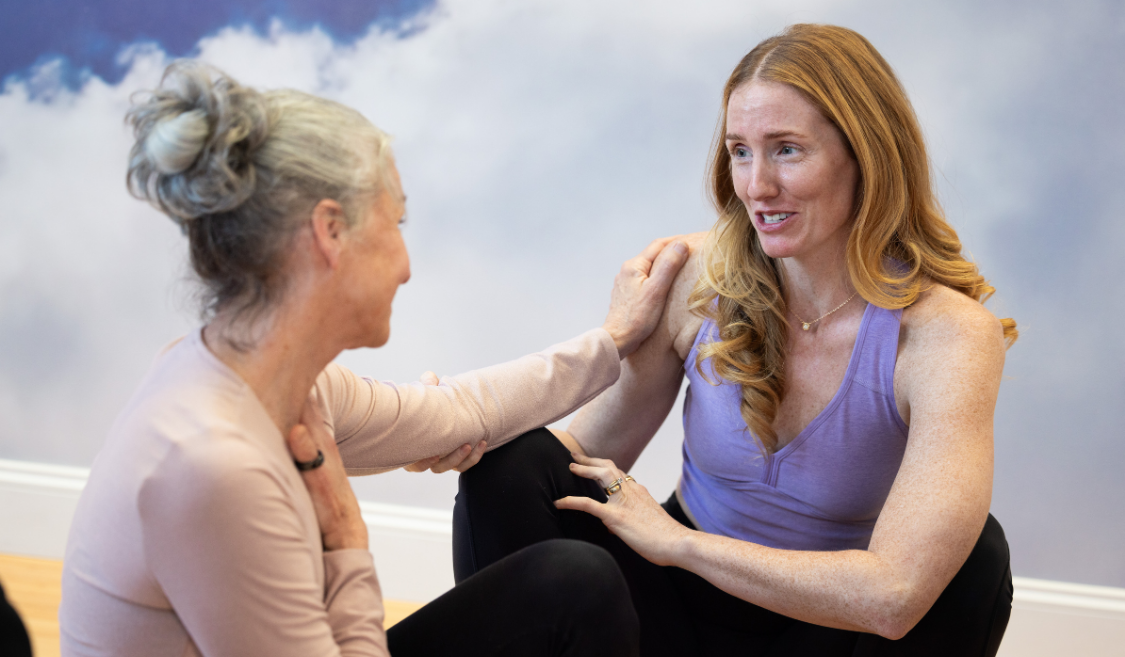
The work is learning to see that. To find language that helps a student locate their own version of the pose rather than copy yours. You practice cueing. You receive feedback. You do it again. The eye that develops through this, for how people are actually experiencing what they’re doing, is one of the things that distinguishes a trained teacher from someone who simply knows a lot of poses.
Teaching methodology
This is the craft side of the 200-hour yoga training. You learn to build a class with internal logic, where each posture prepares the body for what follows, where the energy of the room rises and settles with intention. You learn what to do when your words aren’t landing, how silence can be more instructive than more talking, and how to stay present with a student who is struggling without projecting or over-managing.
Then you teach. In front of your peers, with experienced teachers watching and giving real feedback. Multiple times. By the end of a good training session, standing at the front of a room doesn’t feel like stepping off a ledge anymore. It feels like familiar ground.
Anatomy and physiology
Students tend to underestimate this section until they’re inside it. Understanding skeletal structure, how muscles and connective tissue work, and how breath directly affects the autonomic nervous system, it changes how you teach in ways that go deeper than technique. You stop guessing. You start understanding why certain poses are contraindicated for certain bodies, what’s actually happening when a student pushes past a healthy edge, and how to build practices that support people rather than challenge them in ways that don’t serve them.
A teacher who genuinely understands anatomy teaches with a different quality of care. Students feel that care even when they can’t name it.
Yoga philosophy
The Yoga Sutras of Patanjali. The Bhagavad Gita. The eight limbs of practice. Some people arrive skeptical that texts this old have anything practical to offer a modern practitioner.
Something shifts around the third week of a 200-hour yoga teacher training. Not in everyone the same way and not always at the same moment. But there is usually a point when the studying stops feeling like preparation and starts feeling like excavation, when you realize the training isn’t just teaching you how to lead a class. It’s asking you to look at yourself more carefully than most of your ordinary life demands.
Pranayama and meditation
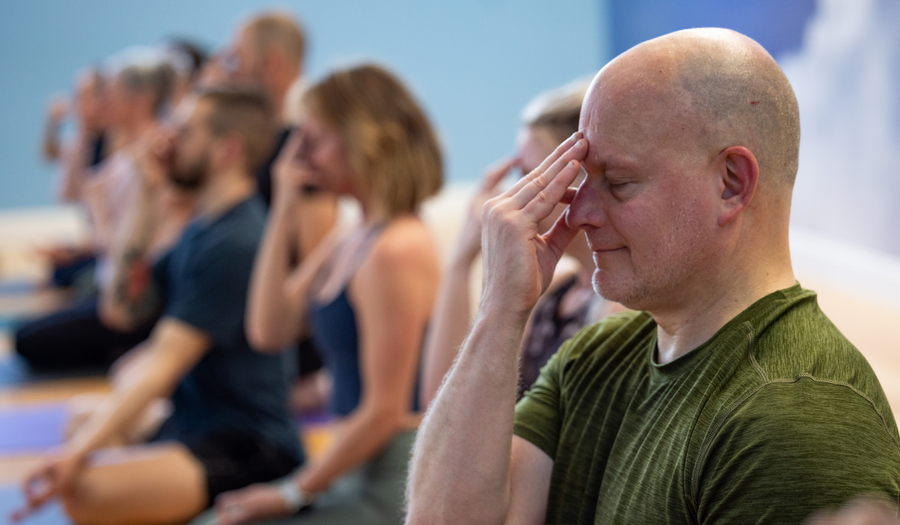
Breathwork, practices that work directly with prana, or life force, through conscious regulation of the breath, get their own dedicated section in any serious 200-hour yoga teacher training course. You work with techniques like nadi shodhana (alternate nostril breathing, which settles the nervous system into balance), ujjayi (a resonant breath that builds internal focus and warmth), and bhastrika (a vigorous practice used to clear and energize the body). You practice them long enough that you stop understanding them intellectually and start feeling what they actually do.
Then comes the part that tends to stay with people longest: learning to guide someone else into stillness. That shift from practitioner to guide, from doing to holding space, is something people talk about years after they’ve finished training.
Supervised teaching practice
You can study teaching indefinitely. You cannot learn it without doing it. The practicum portion of a 200-hour yoga teacher training course is where classroom knowledge becomes embodied skill, planned classes, real students, live feedback, and real-time adjustments are made. The number of times you actually stand in front of a group and teach is probably the single clearest indicator of a program’s overall quality. It’s worth asking that question directly when you’re evaluating your options.
The RYT 200 credential—what Yoga Alliance actually requires

When you complete a 200-hour Yoga Alliance teacher training at a Yoga Alliance-registered school, you become eligible to register as an RYT 200 directly through Yoga Alliance. The credential is globally recognized and is the baseline standard for professional yoga teaching in most professional contexts.
Yoga Alliance sets minimums for how the hours must be distributed: at least 100 hours in techniques and practice, asana, pranayama, and meditation; 25 in teaching methodology; 20 in anatomy; 30 in philosophy and ethics; and 10 in supervised teaching. The remaining hours vary by school and reflect each program’s particular emphasis.
Maintaining the RYT 200 requires 30 hours of continuing education every three years, reflecting the understanding that a teaching practice grows over time, not just during training.
The E-RYT 200, or Experienced Registered Yoga Teacher, is a separate advanced tier. It requires a minimum of two years teaching post-certification and 1,000 documented teaching hours. It develops with time. It’s not something you earn at graduation.
In-person, online, or hybrid: what the choice actually means
In-person training gives you things that are genuinely difficult to replicate through a screen. Real-time feedback on your physical alignment. The experience of giving and receiving hands-on adjustments. The kind of attention that develops when a group of people spend weeks in the same room, working through
the same material together. The relationships that form in a residential or intensive 200-hour yoga teacher training course tend to stick; people describe them as among the most meaningful connections they’ve made as adults.
Online training offers real flexibility, and for theory-heavy components, it can go genuinely deep. Philosophy, anatomy, and breathwork instruction translate well to an online format when the program is designed thoughtfully.
Hybrid programs, which Yoga Alliance now formally supports, offer a middle path: foundational and theory work completed online and in-person intensives for teaching practice and hands-on learning. They’ve become more thoughtfully built in recent years and can work well for students who can’t relocate or take extended time away.
The question worth asking, regardless of format: How much do you actually teach, and who is watching and giving you real feedback when you do? That answer tells you more about a program’s quality than almost anything else.
Where a 200-hour yoga teacher training program can take you

The practical range is broader than most people expect going in.
Studio and gym teaching is the most common entry point: group classes, regular students, and the rhythm of a teaching schedule. Corporate wellness has grown significantly over the past decade, and the RYT 200 is the credential most programs require as a baseline. Schools, hospitals, and recovery centers are bringing
yoga into contexts where it does real work, and the 200-hour yoga teacher training is the foundation for almost all of it.
Private sessions tend to come later, as teachers build experience and a client base. Online teaching, including recorded classes, subscription platforms, and live-streamed sessions, has become a genuinely sustainable path for many.
And then there are the people who finish a 200-hour yoga teacher training program and decide they don’t want to teach professionally at all. The training still changed something in how they practice, how they understand their own mind, and how they move through difficulty. That has value that doesn’t require a class schedule to justify it.
Why Asheville Yoga Center and Why Asheville
Asheville Yoga Center has been training yoga teachers since 1997. Our 200-hour yoga teacher training program called “Teaching From The Heart” holds full Yoga Alliance registration, and our faculty are long-term practitioners who have devoted significant parts of their lives to studying and teaching. We share our campus in downtown Asheville with the Ayurvedic Institute, led by Dr. Vasant Lad, which means the depth of study available here is singular in ways that are hard to quantify and easy to feel once you’re actually in it.
We offer both intensive and weekend formats, built for different schedules and different ways of learning.
Asheville itself is worth naming. The city’s culture around wellness, healing, and conscious living is not incidental to the training experience. The environment supports the kind of interior work a good 200-hour yoga instructor training asks of you. That’s harder to put on a curriculum page, but it’s consistently what people mention when they talk about why they chose to train here.
Most people who enroll don’t arrive certain. They arrive curious, often a little nervous, sometimes carrying questions they can’t fully articulate yet. In over 25 years of running this program, we’ve found that’s exactly the right starting place. Certainty can wait. Curiosity can work wonders.
If you’re weighing this step, explore our 200-hour teacher training program here or reach out to the AYC team directly; we’re happy to talk through what the experience is actually like before you commit to anything.
What the 200 Hours Leave in You

The people who go in with genuine curiosity, not just credential-hunting, tend to say, years later, that it was one of the more clarifying decisions they made. Not only because of what it opened professionally, but also because of what it did to how they understand themselves.
The questions you start asking during a 200-hour yoga training don’t stop when the schedule ends. The practices settle into the body and stay there. The people you sat with, the moments when something clicked, and the teachers who held the room with a quality of attention you hadn’t encountered before—these become part of how you move through the world. Whether or not you ever stand at the front of a class.
That’s what these hours actually are. Not a workshop with a certificate at the end. A beginning that keeps unfolding.
If this resonates, explore our 200-hour Teacher Training at youryoga.com and see what’s available this year.
Frequently Asked Questions
Q1: What is a 200-hour yoga teacher training?
It’s the foundational certification that qualifies you to teach yoga, built around Yoga Alliance’s standards and covering asana, pranayama, meditation, anatomy, philosophy, and how to actually lead a class. But what most program pages won’t tell you is that the credential is almost secondary to what happens inside those hours. People walk out understanding their own practice and their own mind in ways they didn’t go in. That tends to be the part they talk about most.
Q2: How long does a 200-hour yoga teacher training take?
Anywhere from four weeks to several months, depending on the format. Intensive programs run full-time daily for roughly a month. Weekend formats spread the same hours across eight to twelve weekends, which works well if life doesn’t pause easily for you. The curriculum depth is the same either way. What’s different is the pace and how it fits around everything else you’re carrying. It’s worth thinking honestly about which one you’ll actually show up for fully, not just attend.
Q3: How much does a 200-hour yoga teacher training cost?
Most programs land between $2,000 and $4,000. Payment plans, early enrollment pricing, work-study, and needs-based scholarships are more common than people assume. Ask directly rather than ruling a program out before you know what’s available. And when you’re comparing costs, look at what’s actually included. Faculty experience, curriculum depth, how much real teaching practice you get—those things vary a lot, and price alone won’t tell you which program is worth it.
Q4: What comes after a 200-hour yoga teacher training?
You become eligible to register as an RYT 200 with Yoga Alliance, the credential most studios, wellness programs, schools, and hospitals use as their hiring baseline. Where you go from there is genuinely wide open. Some people start teaching right away. Others move into 300-hour training to go deeper in philosophy, yoga therapy, or a specific lineage. Some don’t teach professionally at all and still say it was worth every hour. The 200-hour yoga training tends to work more like a foundation than a finish line, something you keep building on long after graduation.
Q5: Who can join a 200-hour yoga teacher training?
Most programs ask for six months to a year of personal practice before you begin. Not because you need to be advanced; you don’t, but because you need to know what practice feels like from the inside before learning to guide others through it. Beyond that, people of all ages, backgrounds, and experience levels enroll, and a lot of them have no plan to teach professionally. They’re there to understand what they’ve been doing on the mat, to study philosophy properly, or to explore meditation in a real structure. Curiosity
and honesty with yourself matters more than how long you can hold a pose. Check with your program on specific prerequisites.
Q6: What will I learn in a 200-hour yoga teacher training course?
More than you’re expecting. The physical side covers asana alignment, anatomy, sequencing, cueing, and hands-on assists. The philosophical side goes into the Yoga Sutras, the Bhagavad Gita, the eight limbs, and the subtle body, not as background reading but as actual study. Pranayama and meditation are central, not supplemental. And then there’s teaching practice: standing in front of real people, getting real feedback, building something that actually holds up. By the end of a well-built 200-hour yoga alliance teacher training, the knowledge doesn’t sit in separate compartments anymore. It becomes one way of seeing.
Q7: Where is the best place to do a 200-hour yoga teacher training?
Depends on how you learn and who you want to learn from. Full Yoga Alliance registration is non-negotiable; without it, your hours won’t count toward RYT 200. After that, look hard at the faculty. How long have they been practicing? Who did they train under? A teacher who has lived inside this material for decades teaches differently than someone who completed their own training recently. Ask how much you’ll actually teach during the program; the answer matters more than almost anything else on the brochure. And if you can, talk to someone who already went through it. Not the website testimonials. An actual person.